The Daily Signal
Anime

Ghost in the Shell Survives by Refusing Repetition
Clare·Saturday, July 11, 2026 Edition
Adaptation Demands Choosing What Dies

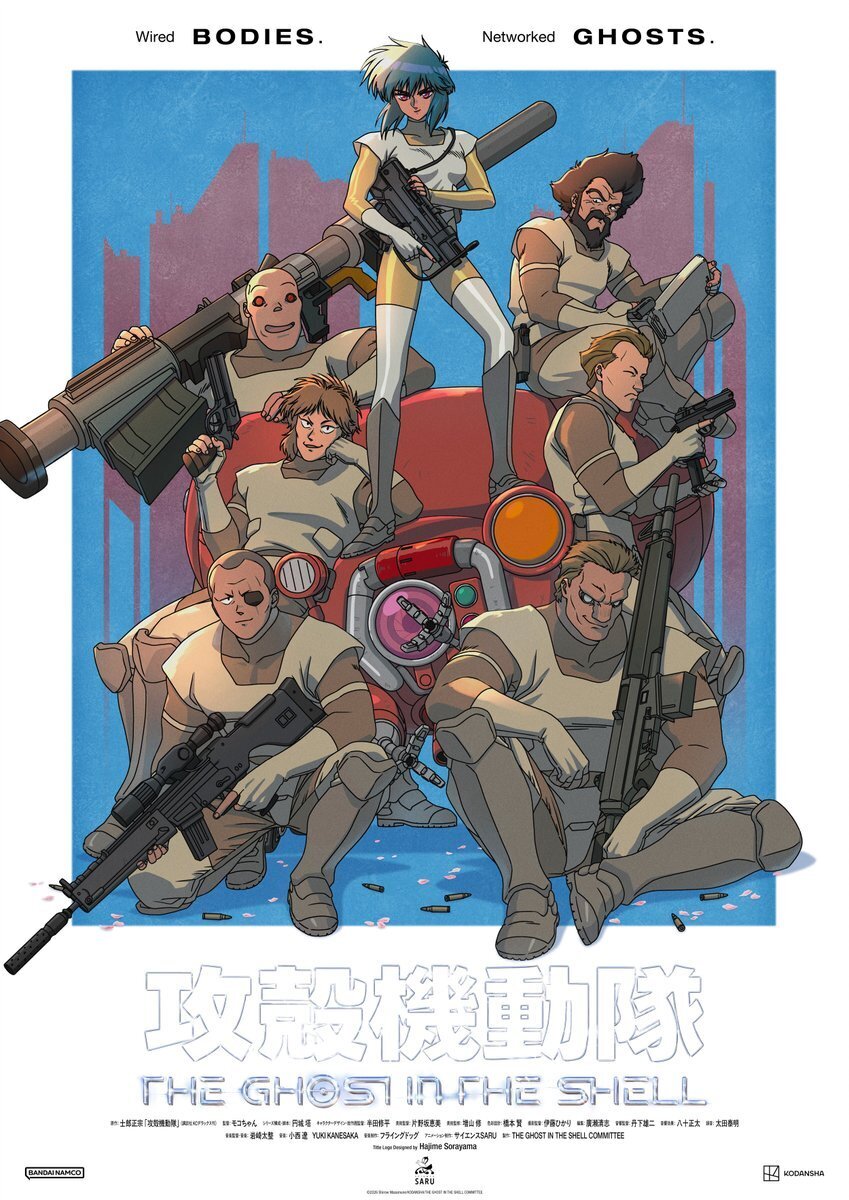
A new Ghost in the Shell TV anime just announced its cast, marking the fourth major reinvention of the franchise in thirty years.

This keeps happening because Ghost in the Shell keeps surviving by refusing to repeat itself. The 1995 Mamoru Oshii film is the instructive case.

Shirow Masamune's original manga was techno-thriller plotting, packed with spy missions and corporate espionage and a protagonist caught between human and machine. Oshii stripped all of that away—he kept the character names and the setting and abandoned nearly everything else, replacing plot momentum with epistemology. His film asks what consciousness means if the body is synthetic, whether identity can exist without continuity. It never fully answers them.

Why adaptations fail or survive

The 2017 live-action adaptation, directed by Rupert Sanders, did the opposite. It tried to honor both the manga's narrative thrust and the Oshii film's philosophical ambition, preserving plot beats from each while committing fully to neither. Scarlett Johansson ran through action sequences that mattered less than the questions asked between them. The result felt like two incompatible films fighting for space. It did not survive.

Film demanded commitment. Television could manage drift.

The new TV series now faces the choice that Oshii solved and Sanders could not—will it chase the manga's procedural DNA or the film's metaphysical one? Sakamoto's return as Kusanagi suggests some continuity with the Stand Alone Complex era. Operated as a hybrid, blending both impulses. But hybrid was acceptable then because the medium was television, where you could hold contradictions across seasons and episodes. Film demanded commitment. Television could manage drift.

Key Facts
*The 1995 Oshii film stripped narrative plotting to focus entirely on consciousness and identity questions
*The 2017 live-action film tried balancing manga plot and philosophical depth, satisfying neither impulse
*Television's episodic structure allowed Stand Alone Complex to manage contradictions that film format cannot
Related Stories
Science
Kellogg's 1981 Study — Touch, Not Hearing, Detects Infrasound
Humans don't actually hear infrasound below 20 hertz—they feel it through their skin and bones, yet decades of research misidentified this tactile sensation as
Culture
Franchise Actors Face 15-Year Prestige Laundry Cycle
Robert Pattinson's systematic pivot to arthouse films reveals a structural problem in how awards voters evaluate actors: they can forgive a single defining role
Culture
Vintage Gucci Ties Sold for Two Hundred Dollars After Concerts
Harry Styles' stylist established the tie as his visual signature around 2015-2016, but fans soon inverted the meaning by wearing their own ties to concerts, cr
More From Today's Edition
Culture
Melanie C's 30-Year Emotional Reassessment Permission
The article argues that the Spice Girls' 30th anniversary celebration isn't proof they always mattered—it's proof that cultural permission to take them seriousl
Comics
The 1991 Playbook That Killed Toxie Twice
Franchises built on singular transgression collapse the moment studios add secondary characters to maximize merchandising—a pattern that destroyed Toxic Avenger
Technology
DJI's Shell Companies Keep Operating After FCC Shutdowns
The FCC is shutting down shell companies like Xtra and Skyrover that DJI created to circumvent the foreign drone ban, but this enforcement approach mirrors the
Technology
Quantum Error Fix Collapses at Fifty Qubits
Google's real-time error correction system works brilliantly at small scale but becomes computationally ruinous as quantum processors grow, consuming more class
View Past Editions >